
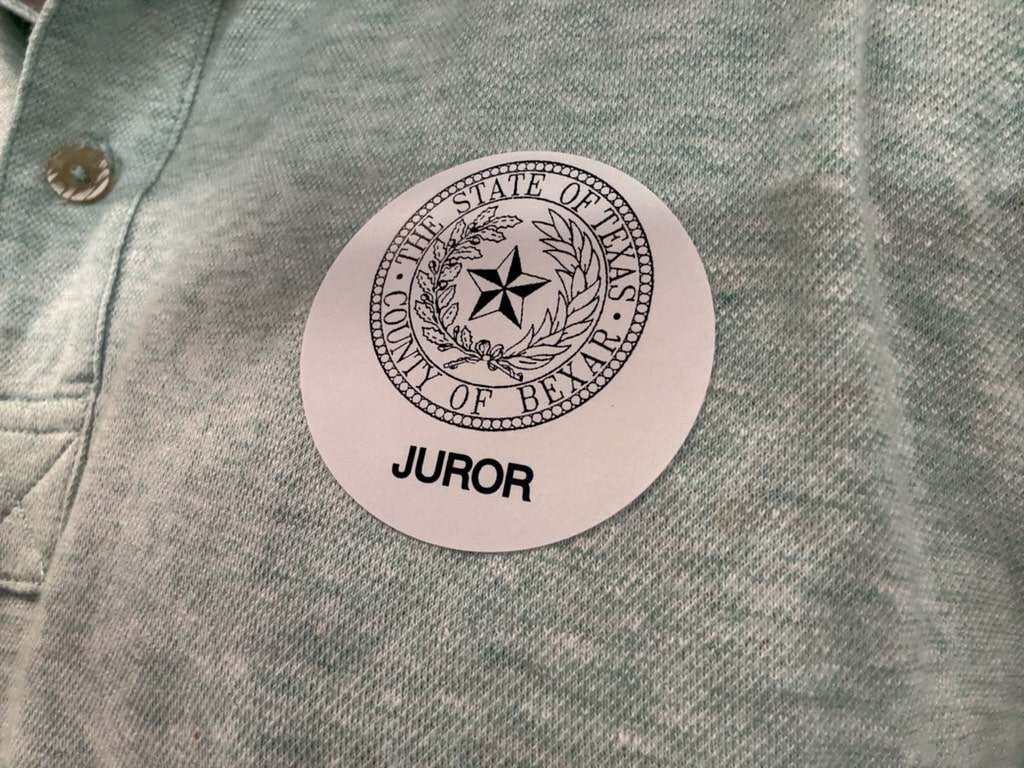
As a citizen of the United States, I have always wanted the opportunity to sit on a jury. Most of us have seen 12 Angry Men. If you haven’t seen the film, then perhaps you have seen other movies or shows depicting one’s service as a juror. You may often wonder, “What would I do if placed in such a situation?” Well, I finally have an answer.
I am a career litigator. I defend service members in military courts-martial worldwide. So, when I received the jury summons to Bexar County, I scoffed.
“They will never pick me,” I thought.
Upon receiving the summons, I figured I was off the hook because I was to be in trial the week my service was required. However, upon speaking to a mentor (who also happens to be a District Court Judge), I realized I would have to defer my service until such time as my schedule would be open to complete jury duty.
In military courts, we often share our litigation schedules with each other for scheduling purposes. Over the following months, I received a lot of ribbing from folks for blocking a particular week in September for jury service. I was told over and over again, “There is no way you survive the venire…” I naively agreed with the sentiment. Frankly, I was looking forward to a week of catching up on some work. Yet, as I was to find out, there was a different plan in place for me.
Day One: The Venire
For the uninitiated, the venire is the pool of potential jurors from which the final 12 are selected. Voir dire, Latin for “to speak the truth,” is the process by which counsel for each side question members to determine biases held by individuals in the venire. The military has a similar process. The main difference is that the Convening Authority, usually the unit Flag Officer, picks the venire. In the civilian sector, the names are selected from the county in which they live.
It was 8 a.m. on a Monday morning, and 400 of us were packed into a large basement room. We sat and waited for about twenty minutes to account for stragglers. While waiting, I took the time to snap a couple of selfies and post them to social media. Again, the scoffing came, and I began to have a premonition that maybe things may end up the opposite of what I expected. Eventually, we were provided an orientation to the facility and the process that some of us were to experience that day.
Bexar County has a well-oiled process. The handlers did a wonderful job of briefing us on what to expect.
After the initial briefing, I went to grab a coffee and then came back to my seat to wait. Bexar County Courthouse has a convenient little café adjacent to the holding area for jurors. As I sat, I pulled out the latest Star Wars novel and began to read until the first announcement. The first jury pool was for 45 members. The next pool required 65 members. Then the third panel was announced.
“Juror Number 2, Joseph Jordan,” said the announcer holding the clipboard.
I promptly packed my shoulder bag, quaffed my coffee, and tossed away the empty container as I walked out the door to take my position.
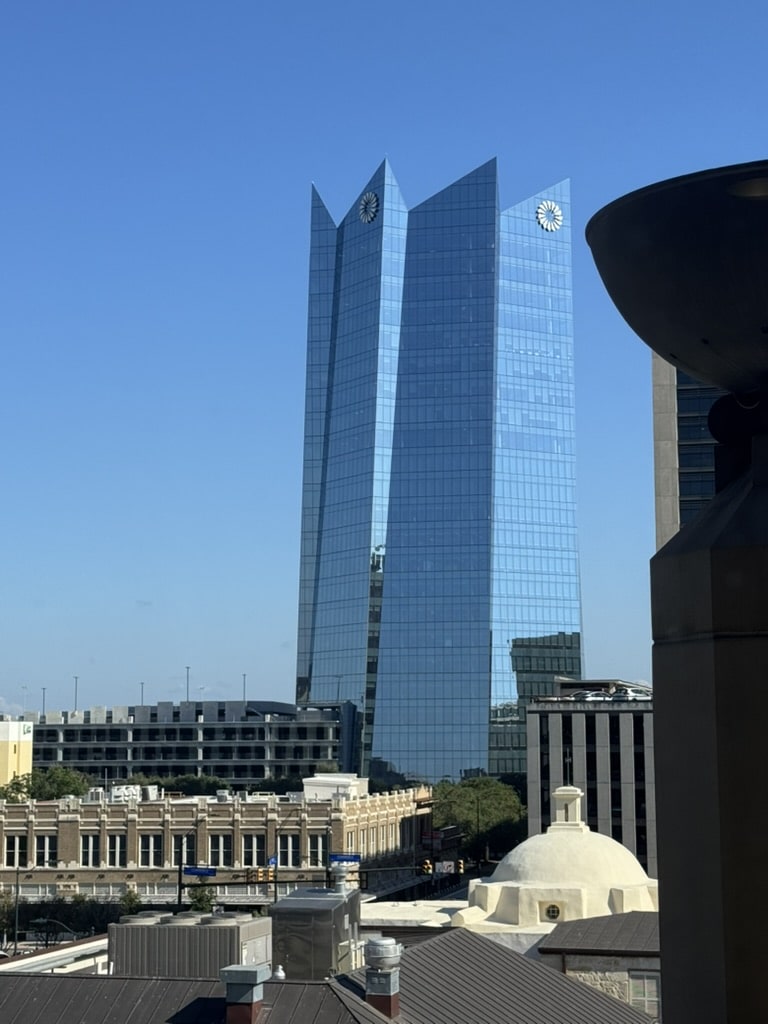
Sixty-four members were called. We all stood in line outside until our new handler walked us up three flights of stairs to the District Court we would be assigned to. Then, we were briefed that it would be about an hour before we could be seated. We could not leave the floor, so some took seats on the various benches in the hallway while others sat on the ground. I opted to stand in an adjacent room looking out the window at the San Antonio skyline. One hour turned into two. Finally, we were all called into the room to participate in the selection process.
Voir Dire
All 64 of us were seated in the gallery, which is the term used to describe the area where spectators sit. Trials are public events. Anyone can watch unless the Court closes the proceeding for a particular reason. Counsel sat opposite their tables and faced us.
While counsel for the State of Texas and the defense studied us, the Honorable Judge Rangel introduced himself, thanked us for our service, and proceeded to give a brief civics lesson on the importance of our duty. He expressed many personal anecdotes and used the time to subtly ferret out bias with carefully crafted questions. He was very ingratiating and personable. He seemed to have a unique personalized experience for every answer thrown his way, finding common ground with members of the jury pool.
Judge Rangel is the classic politician. I was not used to this level of projected familiarity from a Judge towards the panel…and it reminded me that Judges are elected here in Texas. In the military, everything is very formal. Judges, members and most lawyers are stoic. Some Military Judges are friendlier than others; however, the general rule of thumb is stoicism.
When Judge Rangel started speaking to us it was about 11:30. He wrapped up at noon and then gave Counsel for each side 45 minutes to question us.
The prosecution started first. Interestingly, they spent much of their time teaching us the general elements of the crime being prosecuted: burglary. Their questions were broad and not particularly incisive. Yet, despite the lack of particularity in their questions, many fellow citizens took their opportunity to speak their mind about how they feel about the justice system in general. It is remarkable how much naiveté and distrust I observed from my fellow potential jurors. At the conclusion of their questioning, I was not particularly surprised that I was not picked out of the crowd for questioning. I figured that might come later or that the prosecution already made their mind up on me.
The defense voir dire presentation surprised me at first. The lead counsel was Hispanic and had a thick accent. He knew it and used it to his advantage. He spent the majority of his time teaching us about reasonable doubt. Later, at the conclusion of the trial, I was to understand why. The lead defense counsel opted to call me out twice during general voir dire.
“I know there are some lawyers in here,” he said. “Juror Number Two, you are a lawyer, yes?”
I nodded in response.
“Great, can you stand up and tell me what evidence is?”
I looked at him for a moment, studying him and pondering the question. My first internal reaction was, “Are you kidding me…really? You are asking me what evidence is.”
“C’mon, please, stand up and tell us all what evidence is,” he said, interrupting my thoughts.
So, I stood, and I contemplated a snarky answer about how it’s a semester of law school so where do you want me to start. Instead, I pointed to the slide deck presentation behind Judge Rangel, and I stated, “Examples of evidence are on the slide behind you.” The examples included witness testimony, documents, and photographs.
Towards the end of his presentation, he once again called upon me to explain another legal concept. “Juror Number Two, please tell us why lawyers object.”
This time, I didn’t pause. “Well, usually it’s because there is evidence that one party feels is being improperly admitted, or there is an issue or question of law on a fact to be resolved by the judge…. it could be any number of issues.”
Satisfied, he moved on. I remained mystified at his questions to me, wondering what the point was.
Finally, we broke for lunch. I managed to fall into a group from our panel heading to the same restaurant. As we sat and ate, we talked briefly about the process. Contrary to my own belief, my table of lunch comrades all felt that I would be selected. I jokingly told them, “If that is the case, I am going to have a hard time not treating this as American Idol for Lawyers.”
After lunch, we were ordered to line up in our numerical designation order. Then, the counsel called in jurors individually to question. I believe ten were called back. Every time one left the court room, they seemed unhappy. This process is known as individual voir dire, wherein counsel is permitted to question a certain number of prospective jurors individually outside the presence of the rest of the members. Once the questioning was finished, we were asked to enter the courtroom once again and take our seats.
We sat as we received new instructions. If our juror number and name was called, we were to immediately proceed into the jury box. The first name and number were read. “Juror Number Two, Joseph Jordan.” Stunned, but wearing my best version of a Han Solo lopsided grin, I made my way into the jury box and waited as 12 more names were called. One was an alternate. Sitting there, I commented quietly that my colleagues were not going to believe this.
Some of you may be wondering why it would be odd to have an attorney on a jury panel. First and foremost, attorneys are presumed to know the law. Some may view us as “experts” in the deliberation room and could sway the jury one way or another. Second, I have been a military criminal defense attorney for almost 15 years (though I have practiced military law for over 19 years). Most prosecutors would not want a career defense counsel sitting on their panel, if for no other reason than they may assume that I am already against them from the start. Finally, a defense counsel might strike me simply because after nearly 15 years of private practice, I have seen most types of clients and heard most types of stories. They may fear that I will be hypercritical of their case based on my years of experience.
Oddly enough, I was not individually questioned. While not surprising at the outset, it is startling to think about since I was indeed selected instead of challenged. Counsel are given two types of challenges: (1) they can challenge for cause any members they choose, and (2) they have a limited number of peremptory challenges based on any reason, and these are automatically granted without the counsel’s reason stated for the record. There are some exceptions that apply but I won’t bore you with the details. Suffice it to say, either side could have used a peremptory challenge on me, but they opted not to.
After jury selection was complete, we were released to go home and requested to be back at 9 a.m. the next morning to be sworn in and receive opening statements.
Before we were released, we were brought into the deliberation room, which also doubled as our break room. This was a proper deliberation room, with a full-sized refrigerator, a sink and a bathroom. As we waited, we all chuckled a bit at our new circumstances. It was a new and unique experience for all of us. Eventually, the bailiff came in and greeted us. We were handed our badges and given a brief orientation to our new workspace and how to enter it. Finally, we were allowed to go home.
The next day, most of us arrived early. We all found our place around the conference room table in the center of the room and began to get to know each other. This panel was very interesting. We had three schoolteachers, a retired grandmother, a local business owner, a microbiologist, a computer programmer, a Medicare plan builder, an Air Force NCO, a Six Flags actor, a paralegal, an accountant and a lawyer. Three of us were veterans. Four of us were female. Eight of the thirteen members were Hispanic. From a defense perspective, this was a great panel because we were all experienced citizens from many walks of life. We enjoyed grandma’s cookies, as we all introduced ourselves to each other. I think the introduction of freshly baked cookies calmed a few things down and added a bit of normalcy to a seemingly abnormal day.
After we were all accounted for, at the appointed hour, we all marched into the jury box and were sworn in. While some of us may have been a bit apprehensive, most of us were genuinely curious to see how the case would unfold before us.
Opening Statements
Finally, what is this thing all about? We already knew burglary was involved from the government’s voir dire. So, during opening the government told us we would hear evidence from three 911 calls. They told us that the accused had broken down a residential door while making threats to kill the occupants inside. Then they listed out the witnesses that we would likely hear from, including the aunt who made the 911 call. They explained that at the time of the break in, the aunt and her mother were in the house. This was the only context clue given for how the accused was associated with the burgled house.
Overall, the government’s opening statement was anti-climactic. They offered no theme or theory to their case. They gave us only the facts of what they believed the evidence would show and once again gave us a lecture on the elements of the offense.
Defense Counsel reserved their argument. Personally, I have never reserved an argument, and I was already a bit apprehensive as to why the defense made that choice. When the trial concluded, their strategic decision made sense.
The Case:
The 911 Calls. The Government first called the 911 operator. She testified about how she was the records custodian for the three 911 calls. She detailed the time frame of each exact call. The first call was at 14:16. The next call was at 14:22 and the last call was at 14:24.
Once they were properly authenticated, all three 911 calls were entered into evidence and played in open court.
The first call depicted a somewhat excited and stressed woman calling about a man banging on the door. It became clear to me that she was the aunt, and he was the nephew. Interestingly, she explained that “we give him money and feed him.”
“Well, at least we know why he is there,” I thought.
The caller also listed the man’s birthday. I wrote down both pieces of information as key facts. She knew him well enough to know his birthday and they provide food and money to him. Ultimately, she was calm and clear on the call, able to describe the man in detail. The 911 dispatcher indicated an officer would be on their way.
The next call was dramatic. The Aunt called again, this time she was yelling. “He is inside the house. He broke the damn door down, he is in the f-ing door, I told you he is trying to kill us,” she yelled frantically. Then, she yelled, presumably at the intruder, “I will f-ing kill you.” To the 911 dispatcher she yelled “he is going to f-ing kill us.” Then again, she yelled at her nephew “I will f- you up, I will stab you.”
“If you don’t get here, I will kill him. Call EMS, I am about to kill him,” she yelled angrily. The call also made it clear that the aunt making the call was not in alignment with her mother. From what we could hear, it appeared that the mother was trying to calm things down, while the aunt was rapidly escalating the issue. At this point in the call, the aunt revealed that they locked themselves in the master bedroom.
The third call was much calmer. The Aunt again explained how the door was broken down and they had barricaded themselves in the master bedroom. The Aunt was still agitated and wondered when the patrol officers would show up. She was told that the officers arrived and that ended the call.
Cross examination of the 911 call records custodian pinpointed all three calls by longitude and latitude. He then established that the police arrived at 14:24. Finally, the defense counsel established that the third call came from a separate number from the first. This final fact was an issue discussed in deliberations.
Next, Government counsel called the aunt. First, she detailed and diagrammed the house. Many of us in the panel drew the layout on our note pads. She explained that the home was her mother’s house and that her mother owned the home for 40 years. She detailed how ill her mother was currently, and that is why she could not be present to testify. When I heard that, I immediately wrote, “where is the doctor’s note?”
The Aunt then began to explain what happened on the day in question. At approximately 14:16 she was awakened by her mother. She explained that the accused was her nephew, and more specifically that her nephew was her sister’s youngest son. He never lived at the residence. Unfortunately, her nephew was living on the streets at the time. Routinely, he would drop by his grandmother’s home for food, clothing and a bit of shelter. The Aunt worked hard to establish that the nephew was only ever allowed on the porch but NEVER inside the house. I noted not only the “fact” but also how this particular “fact” was presented.
The government directed the witness back to the incident charged. The Aunt described her nephew as very agitated. He kept swinging the outer screen door. According to her, he would walk away, then approach the door, demanding into the house. The Aunt testified that she finally had enough, grabbed her mother’s phone and called the police.
The Aunt went on to describe that her nephew stated that someone was after him. Then she said he once again demanded to be let inside and threatened to kill them. These “facts” bothered me. First, we listened to the 911 calls. I already knew that no threat of violence was captured on the call from the accused towards the family. The only threats of violence made were by the aunt herself. I also didn’t understand why the accused would go from saying someone was after him to a threat to kill the occupants inside this house, which had been symbolic for feeding, clothing and sheltering him. I wrote those observations down for later discussion during deliberation.
The Government asked the aunt why she was afraid. She merely stated that he had been violent in the past. This “fact” was never explained, likely because it had been ruled inadmissible by the Court at a previous hearing. Yet, it was a topic of discussion in deliberations later.
Unprompted, the aunt went on to detail how her mother wanted to open the door to calm her grandson down. The Aunt refused to acquiesce to her mother’s request. Instead, she ran to the kitchen and grabbed a knife. When she returned, according to her, the accused broke down the door. As he did so, he fell, looked up and quietly said he would kill them. She replied by threatening to kill him.
She described how she guided her mother to the master bedroom, shut and locked the door. Once in the room, her mother attempted to open the blinds to get out the window. The Aunt was yelling threats. At the same time, she was yelling at her mother saying he was going to kill her. The Aunt’s threat was also captured in the second 911 call. The Aunt described how she prevented her mother from leaving the house through the window, and we later saw photos of blinds that appeared to be in disarray.
At this point in the aunt’s testimony, she began to take the jury through a series of fifteen photos. These photos first depicted the door. I immediately noted that the door was not broken down. The door appeared to be kicked or pushed open. Broken door frame molding was on the floor. To the discerning eye, one could tell that the wood was old. It wouldn’t take much force to get the door open to someone who was determined. This issue was later discussed at length during deliberations.
The Aunt described photos of the knife she wielded, the hallway, the pathway to the rooms, and the window her mother attempted to crawl out of. We also saw photos of the backyard.
First, the defense counsel made it a point to note that the aunt did not record her nephew’s alleged actions. She could call 911 but not record the incident with her smart phone. Through the aunt, defense counsel pointed out that the nephew was banging on the outside walls and windows of the house.
Defense counsel confirmed through questioning that the door was busted open during the second 911 call. He questioned why no one could hear the door bursting open during the call. He questioned why we couldn’t hear the splitting of wood on the call. Next, he confirmed that her nephew didn’t get up off the ground and attack her.
Defense counsel went on to commit the Aunt to confirming there was no damage to the bedroom door. Defense counsel further committed the aunt to the fact that she was leaning against the door, while on the 911 call, yet we could hear none of the threats allegedly made by the accused. Instead, we heard the accused requesting them to call the cops. He said it at least five times. The Aunt refused to agree to these points until the Defense counsel replayed the 911 call.
At this point in the questioning, the defense counsel turned his questions to who had the superior right to the house, noting that it was the mother who advocated to let her grandson into the house. We learned that the aunt’s daughter was grandma’s caregiver and that the aunt would come over and stay from time to time.
Government counsel attempted to clean up the aunt’s testimony. First, they asked the aunt why she didn’t record the incident. The aunt replied that she was more focused on her and her mother’s safety.
Then, the government did a curious thing. They asked if her nephew was ever permitted into the house. She stated that he had been in the house before during the extreme heat or cold. Before she had stated that he was NEVER let in the house. Additionally, the aunt declined to pinpoint specifically when the nephew was let in the house.
Government counsel’s next focus was on why her mom would want to allow him in the house. Mom’s desire to allow him in the house in the face of death threats puzzled not only me, but most of the jury members as we discussed the issue later in deliberations.
Finally, the Government’s next mistake occurred when they opted to question the aunt on why she was at the house so much. The aunt responded that she was there to sit, and care for her mother. She said she stayed there. I immediately wrote down, “how can you stay at the house and watch over your mother when that is your daughter’s job?” Additionally, the aunt had previously testified that she did not live in this house. The aunt’s credibility was crumbling for me at this point of her testimony.
The aunt was very irritated with the defense counsel and his questioning. He asked her to consider that if the accused was let in the house in the past, and her own mother wanted him in the house, then why would she threaten to kill him on this occasion? She responded by stating she never threatened to kill him. At this point, I knew I could not trust a word out of this witness’s mouth. When pressed further on the issue of her threats, she merely demurred and said she did not remember making any of the threats captured by the 911 call.
The government gamely attempted to rehabilitate their “star” witness’s credibility on these points, but the aunt continued to cite a lack of memory. Further, she equivocated on whether or not she listened to her own 911 calls, leading me to believe she knew exactly what she said, and she decided to lie in open court about an indisputable fact.
Government Counsel next called four law enforcement officers. The first officer who testified was the arresting officer. While the accused seemed a bit paranoid, scared and sweaty, he did not resist arrest. This officer also pointed out that the mother gave him permission to enter the home and search it.
The second officer’s testimony did little to help the government’s case. This officer showed up to the scene shortly after the arresting officer did. The accused was already in custody when this officer arrived at the residence. For some reason, the government thought it important to note that when the accused was placed in cuffs and told to sit on the car bumper, he kept trying to get up. On cross examination, it was brought out that on the day of the arrest, it was hot, and perhaps the car bumper was also hot causing the accused to want to stand up. This officer also confirmed that the accused was cooperative with law enforcement. Finally, this officer detailed that no contraband was found on the accused’s person. The nephew did not have a weapon nor any drugs on him.
The third officer to testify was the crime scene investigator (CSI). He too brought little to the occasion. The crime scene photos were already admitted through the aunt. Yet, the government felt the need to have the CSI testify about the photos and his observations anyway. He did little to enlighten us on what we already knew.
Finally, the last officer to testify was the property crimes investigator. He too was an unneeded witness by the government. He interviewed the witnesses in this case. He testified that charges would not have moved forward if the family opted out. The Government sought to bolster their case by inferring that the mother opted to pursue charges in spite of her absence in the trial. The cross examination of this witness was more compelling. There we learned that the aunt was just “visiting” on the day in question, as opposed to staying or living at the residence. The defense counsel drove home the concept that words have meaning.
The property crimes investigator was the last witness of the day. When we showed up for day three, we anticipated the Defense would start their case. Instead, they rested. The Court broke for a few hours while the parties prepared for final summation.
Closing Arguments
As a career litigator, I am a firm believer that you have either won or lost your case prior to closing arguments being presented. My experience as a juror confirms this belief. Going into the Judge’s instructions, I had significant questions about the Government’s case. Significant questions often lead to reasonable doubt.
In almost every trial across the United States of America, the sitting Judge will read instructions to the jury prior to closing arguments. The instructions in the State of Texas on this case are weighted heavily against the accused. He was charged with burglary. Specifically, he was charged with breaking and entering a residence with the intent to harm the occupants inside. No defenses were presented as a part of the instructions. Additionally, no definition of reasonable doubt was provided. It was at this point that I understood why the defense counsel spent so much time in voir dire on the concept of reasonable doubt.
Once the instructions were read by the Court, final summations could begin. Again, this is a timed event. In Judge Rangel’s court, both counsel on each side are allowed to argue for up to 45 minutes. These are new concepts to me. First, I have never seen two counsels for one side argue a case before. Second, my closing arguments have never been timed.
The second chair counsel for the government argued, and then the lead counsel argued. The defense followed the same formula. It is an interesting approach, but not one I am interested in executing. I believe in one consistent voice at the most poignant points of trial.
The prosecutors’ arguments did little to assuage my concerns and doubts. They detailed their facts presented in court. They focused on their belief that the nephew’s grandmother failed to give effective consent for him to enter the home under the circumstances they presented. Their focus on that issue puzzled me to a degree because the evidence left little doubt that the accused broke into the home. The doubt lay in the reason he broke into the home. The reason he broke in is essential to his guilt or innocence of the charged offense.
During their argument, Government counsel used the phrase “I think” too many times for my liking. First, it’s improper vouching. Vouching is apparently allowed in Texas courts, or it simply went unobjected to by defense counsel. Second, if Government counsel merely thinks, then they don’t know. They are unsure. That certainly does not rise to the level of beyond a reasonable doubt.
Defense counsel predictably highlighted the portions of their cross examinations that led to reasonable doubt. He asked logical questions of the evidence, such as “Where is this evidence of loud banging we heard so much about? Where is the evidence of his threats of harm against the family we heard so much about from the aunt?” All we heard were the Aunt’s constant and consistent threats of significant harm and death against her own nephew.
He also touched on the idea of escalation versus de-escalation on the part of the aunt. Why was she so frantic and angry on the phone and the nephew was so calm mere moments later when the police arrived? Finally, he touched on the most compelling evidence for the defense. “Why would he ask her to call the cops?”
Deliberations
During our breaks, my fellow jury members and I made it a point to get to know one another. It’s hard not to when thrown together in a small and confined space for long periods of time. Closing arguments ended roughly 90 minutes after lunch. Pizza and sodas were delivered to us as we decompressed for a bit. After we ate, the panel voted me Jury Foreman.
My first order of business was to take an azimuth check on the panel. I asked if everyone was comfortable voting now just to see where we are at. They all agreed. The vote came in at three voting for guilty and nine for not guilty. We lost the thirteenth juror for this portion of the trial, as they were an alternate.
With the vote at nine to three, it was time to go to work. If this were military court, we would have been done already. Courts-martial only require three-fourths for a conviction. Anything less, and it’s an acquittal.
The first order of business was to ask why the three individuals voted for guilty. The debate started with the break-in. All three guilty voters felt that the aunt had the right to defend herself when he broke in. A few of the not-guilty voters had an issue with the presumption that he broke into the house in the first place.
The panel spent the better part of 45 minutes discussing whether or not the nephew broke into the house. It was noted that the Government presented no evidence that the door itself was kicked open, and some posited that perhaps door framing was already broken in the first place. Most of us dismissed that idea though. First, the framing was clearly very old. This led most of us to believe that it would not take much force to push open the door. Second, there was a minor debate about who then busted the door open since no DNA was taken. To me the DNA argument was a red herring, and I said as much. It was clear that he had been to the house many times. If the door was swiped, most assuredly his DNA would be on it from past encounters let alone the present one.
Once we all agreed that he broke into the home, we then focused on the reason. When I explained the elements of the offense from the jury instructions again, one of the guilty voters turned to not guilty right away. That voter’s focus was only on the break-in. He forgot that all the elements of the offense must be proven beyond a reasonable doubt. In this case, as a juror, you had to be convinced beyond a reasonable doubt that he broke into the home with intent to harm the occupants inside.
Ten out of twelve of us agreed that we could not trust the aunt to be a reliable relator of the facts. We simply did not find her credible. First, we pointed out that she appeared to have lied in open court regarding never making threats of harm toward her nephew when we all clearly heard her make such threats on the 911 calls. We also discussed at length why she would say she was visiting to the investigating officer but told us in court she was staying there.
The discussion did devolve a bit from the evidence at this point as we all pondered the weird family dynamic at play here. It was clear to some of us that the aunt clearly wanted to divorce the grandson from the grandmother. We didn’t know why, but the Aunt clearly labeled him the “black sheep” of the family. So, we batted that idea around for a bit. Ultimately, we remembered we had to limit our speculations on the unknown and focus on the known.
Refocusing on the intent to harm, the nephew’s request to call the cops was brought up. Some heard him say it. Others did not. So, at this point in the deliberations, we went through and listened to each of the 911 calls. As we listened, we stopped the calls at important points to discuss the meaning and effect of the words we heard.
As we listened to the calls, we puzzled over why the aunt was so hysterical on the call. We distinctly hear the nephew tell them to call the cops on at least five different occasions. We puzzled over that fact for a while. According to the aunt, he showed up to the house running from danger. Yet, from the outside of the house listening in, he could also hear a heavy commotion. It was unclear to us why he requested that they call the cops. His sincerity in the request was very clear to us. He was not snarky or sarcastic when he made the statement. He was definitive and almost a bit scared.
Our deliberations then turned to why would grandma request to let him in. Most of us thought it was reasonable to assume that she really did want to de-escalate the situation and understand why he was frantic. We also pondered the idea that the grandmother may be suffering elder abuse from the aunt, and perhaps that is why the accused was so desperate to enter the home given the situation. It was not an unreasonable conclusion under the circumstances.
The discussion then refocused on what happened once the door busted open. The two remaining guilty voters struggled with the idea that she would grab a knife if she didn’t feel she was in danger. The rest of us dismissed her testimony on that point. It didn’t make sense to us. It didn’t make sense that after those so-called alleged threats that he would ask them to call the cops. It also didn’t make sense that, though she had a knife, he didn’t pursue them into the bedroom. A door and a knife are not enough to deter a determined attacker. Despite that, this was the major issue for our two holdouts. They held on to her grabbing a knife to defend herself to the very end of our deliberations.
Our deliberations also pointed out that he made no efforts to enter the home any other way other than the doorway. Again, this part of the discussion didn’t matter much as we already agreed he broke in. However, some made the point that if he really wanted to do harm to those inside, the easier way to enter would be the window.
Once again, the argument devolved into pondering how he was violent in the past. Our two holdouts focused on this issue as it conveniently explained why the Aunt would grab a knife in the first place. Remember, the aunt testified that the accused was violent in the past. We were given no further evidence on that fact. We debated over what being violent in the past meant. One could violently yell at someone. One could violently shake a fist at someone. We also noted that violence could of course be physical. Given the lack of definition and further evidence, we discounted the testimony that he had been violent in the past due the fact that we didn’t find the aunt to be credible. This conclusion was bolstered by two facts. One, we knew he asked them to call the police. Two, we knew the grandmother wanted her grandson to be let in the house.
Finally, our discussion focused on the timeline of events. We noted again that the calls were at 14:16, 14:22 and 14:24. We further noted that the last call was made from a different number. During that call, there was a bit of a delay before any talking occurred. We all concluded that grandma made that call, and the aunt snatched the phone away from her. We came to that conclusion because the second call was not finished when the third call was initiated. This fact further solidified the fact that grandma’s thinking was not in line with her daughter’s.
Ultimately, the debate came down to why he was in that house. We were able to convince the two holdouts that the evidence did not rise beyond a reasonable doubt that he was there to harm the occupants. I don’t know if they were firmly convinced, but they had no explanation for why he requested that the occupants of the house call the police and ultimately, that issue gave them some level of comfort in switching their vote.
I filled out the verdict form and let the bailiff know we had a verdict. Eventually we filed into the court room, and the Court asked me if we had a verdict. I answered in the affirmative.
When Judge Rangel announced the verdict, the accused broke down. He was very emotional. We quickly filed out of the court room and back into the deliberation room, knowing our duty was complete.
After Action Review
Unlike courts-martial, Judge Rangel’s court allows the counsel for either side to chat with us about our thoughts on the case. While counsel were gathering themselves and talking with their client, Judge Rangel came back to thank us for our service and discuss our thoughts. As you might expect, he did most of the talking.
We learned that this was the second time this case was tried. The first go ended in a mistrial due to improper testimony from the aunt. The Judge on his own decided that a curative instruction was not enough to rectify the situation, so he declared a mistrial.
Some of us were concerned about the exonerated (the nephew), especially when we learned he had been in pre-trial confinement for almost two years. I thought I saw an ankle monitor when he sat at counsel’s table. I kept that observation to myself. After the trial, I learned those were shackles. We were curious about what services would be available to him. Unfortunately, very little would be offered to him. The judge was wistful in his remarks, and I got the impression he would like to see more rehabilitative reform in the State of Texas.
The most shocking thing we all learned was the fact that had the nephew been convicted, he would have faced 25 years in prison. We couldn’t believe it. Then, I reflected on my own trials and wondered what the panel reactions were to the few cases I have lost in trial when they heard the maximum sentence allowed.
The defense counsel eventually joined us. The prosecutors had promptly flounced out of the court room at the announcement of the verdict, declining to hear our thoughts. Personally, I think it was a missed opportunity for them because I had taken notes on my thoughts on everyone’s performance in court.
The first question I asked was why they opted to keep me on the case. They candidly said that they could not read me, but they thought I would be a friend to the defense because my occupation was a military criminal defense attorney. They were shocked that the government did not pre-empt me.
Defense counsel detailed to us some interesting aspects of his case. We learned that the nephew heard a commotion inside the house and was desperate to get inside. That is why he said call the cops and eventually busted the door open. He was concerned for his grandmother’s safety. He had a close, long-standing relationship with his grandmother. As we suspected, the aunt downplayed the nature of the relationship between the nephew and his grandmother.
We also learned that he had a significant mental health history coupled with a criminal record. Given his erratic nature at counsel’s table, I understood why he couldn’t take the stand and testify on his own behalf.
At the end of it all, it occurred to me that we exonerated the black sheep of the family. The only one on his side was his grandma. That observation was also discussed in deliberations. I think we all hoped that he would find new, positive and meaningful connections.
Conclusion
Overall, I am very thankful for this rewarding experience. It gives me new insight into how a jury may think and operate in the deliberation room. My jury duty reminded me that the panel members sit in a vacuum. They are only allowed to consider what they hear in the court room and nothing more. Members are allowed to take into account their experiences in life and their knowledge of the ways of the world…but in this case that was not instructed upon nor argued. I was reminded to never forget simple common sense when presenting a case. That is crucial information to the advocate crafting his/her case. There is also a weight that comes with the service. As I have said before, most panel members want to do the right thing. All twelve jurors in this case were solely focused on doing the right thing. I believe in my heart of hearts, that we did. A troubled, yet innocent man has a new lease on life.